TL;DR
5 Portfolio Management Lessons Learned from the Strategic Project & Portfolio Management for Pharma conference: decision quality is becoming the primary success metric; strategy sharpens when the “crux” is explicit; early-stage optionality is a deliberate choice; artificial intelligence (AI) can help reduce bias without replacing judgment; and leadership, culture, and governance are increasingly treated as decision infrastructure.
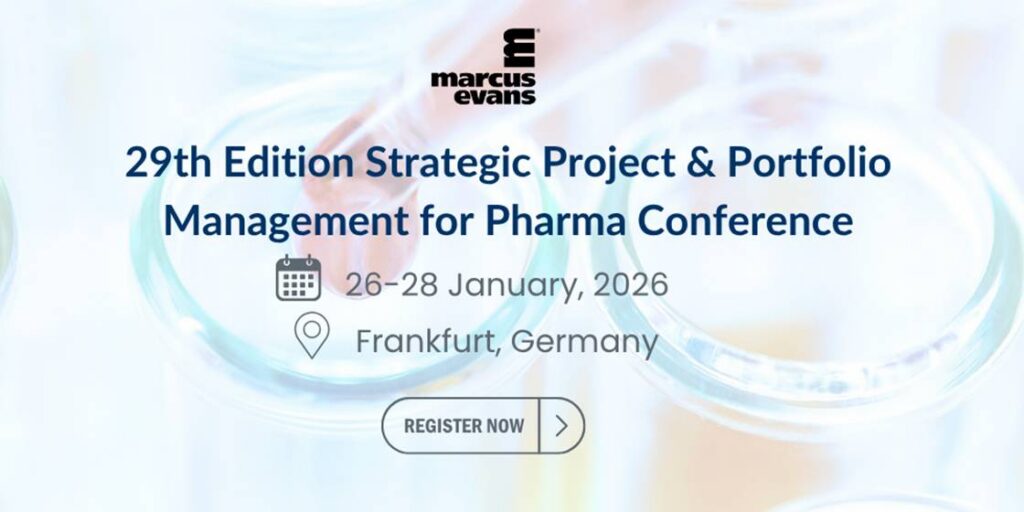
Two Intelligencia AI colleagues, Marianna Esposito and Dorita Metallinou, attended the recent Marcus Evans Strategic Project & Portfolio Management for Pharma conference in Frankfurt. The event focused on strengthening decision-making capabilities and navigating pipeline uncertainty with data-driven insights.
Marianna and Dorita returned with notes and insights worth sharing because they provide an interesting look at where portfolio management is heading: away from process for its own sake, and toward decision quality, strategic focus, and governance that enables, rather than slows, the work.
Here are five themes to highlight:
1) Make Better Decisions Faster
A consistent thread was that the center of gravity is moving from “doing projects better” to “making better decisions faster.” That does not mean execution has become unimportant, but that execution is increasingly treated as a consequence of good portfolio decisions, rather than the primary definition of success.
Critically, success is no longer just about tracking milestones; it’s about ensuring every project has a direct, measurable link to the overarching corporate strategy. Questions like “Are projects directly linked to strategy?” or “Are we investing in the right programs given what we know today?” are increasingly important.
2) Identify and Focus on the “Crux”
The conference picked up on Richard Rumelt’s concept of the “crux”: inspired by rock climbing, the crux is the hardest part of the route, and once it’s overcome, the rest is possible.
The challenge for organizations is two-fold: identify the crux that’s blocking progress and then address it. Instead of dealing with a long list of goals, adopting a “crux framing” forces teams to identify the single challenge that most constrains progress.
When the crux is explicit, prioritization gets easier and resources can be focused there rather than spreading them thin across too many initiatives.
3) Keep the Door Open Long Enough
Another theme was the value of maximizing early-stage optionality in pharmaceutical R&D. Early development is where uncertainty is highest and learning is most valuable. Keeping doors open long enough to learn efficiently can be the rational strategy to allow companies to explore multiple pathways. It also enables them “fail fast” if the data does not support continued development. This increases the chances that potential opportunities aren’t missed while ensuring that investment is focused on the most viable candidates only.
4) Let AI Help You Make Unbiased Decisions
The discussion whether AI will play an important role in portfolio management is over. AI is becoming a standard part of the toolkit and the dialogue has shifted to where and how to best utilize AI-based solutions. The primary role in portfolio management is to provide unbiased, objective data needed for better portfolio decision-making.
Portfolio choices are vulnerable to familiar failure modes such as overconfidence in internal narratives, inertia, and the sunk cost fallacy. AI can help to put decisions on a more solid, data-driven and unbiased foundation. Human judgment remains essential, especially for context and scenario thinking, but it improves when the starting point is more objective and consistent.
5) Don’t Just Pay Lip Service to the Importance of Soft Skills
Last but certainly not least, the conference emphasized that technical skills are not enough and leadership and culture are not side topics. Soft skills such as emotional intelligence, motivation, and business acumen turn into critical success factors.
Paying lip service to the importance of soft skills, however, is not enough. Governance must evolve from a policing instance to an enabler and supporter of truly agile and hybrid ways of working.
Bringing the Themes Together
Across these five themes, one idea stands out: strong portfolio management is less about building perfect plans and more about building good decision-making habits. That means being explicit about the hardest strategic constraint, preserving options so the organization has time to learn, using data and AI to reduce bias, and treating governance and culture as the infrastructure that allows decisions to happen without unnecessary friction.
At Intelligencia AI, our focus is on providing portfolio teams with the tools they need to create the strong, objective data foundation critical for good decision-making.
Please contact Marianna or Dorita if you are interested in discussing further. Here are some additional resources that might be of interest to you:
Expedite Confident Investment Decisions in Pharma
Stop Flying Blind: Here’s How Competitive Landscapes Drive Commercial Success in Pharma
For more tailored, data-rich insights, let’s talk.