TL;DR
A global pharmaceutical company collaborated with ZS and Intelligencia AI to define a long-term investment strategy for its solid tumor portfolio. By leveraging the Portfolio Optimizer solution, they replaced labor-intensive manual curation with harmonized clinical data and explainable AI-driven PTRS (Probability of Technical and Regulatory Success). This approach allowed the team to conduct analysis twice as deep as traditional methods, providing a transparent, data-backed roadmap that countered internal biases and accelerated strategic decision-making.
Strategic Vision for Long-Term Oncology Growth
A global pharmaceutical company’s new product planning team set out to shape a long-term strategy for its solid tumor portfolio—clarifying where to play over the next 5–10 years and how to win within priority patient segments.
Moving beyond a traditionally science-led approach, the organization sought a systematic, commercially informed view of today’s oncology landscape, its likely evolution, and which tumor areas and segments merit investment. This engagement
expanded on a previous high-level white-space assessment, moving into a deeper, section-level analysis to inform strategic choices across solid tumors.
“The result and impact were achieved by applying and bringing a data-backed perspective to counter some of the internal pharma organizational biases,” shared Nan Wang, advisory manager of portfolio, pipeline and business development strategy at ZS.
Core Challenges
Define focus areas. Identify which solid
tumors and segments to prioritize over the next 5–10 years.
Make data-driven decisions. Use explainable PTRS and transparent business rationales to build confidence and trust.
Scale analysis, not effort. Explore current
pipelines and emerging targets or modalities while minimizing manual data mining, curation, and quality assurance.
Key Outcomes
Sharper focus and strategy. Prioritized solid tumors and target segments for medium- to long-term investment analyses using Intelligencia AI data.
Faster, more confident decisions. Leveraged well-structured, harmonized data and explainable PTRS to reduce manual work, deepen analysis under tight timelines, and increase confidence while mitigating bias.
Broader organizational impact. Drove strong internal engagement, with growing interest from Medical and R&D teams; AI-driven PTRS is now recognized as a distinctive enterprise capability.
Streamlined and Minimized Labor-Intensive Process With Harmonized and Well-Orchestrated Clinical Data
ZS anchored the engagement on Intelligencia AI’s Portfolio Optimizer solution, using it as the primary source of truth for the customer’s clinical pipeline across solid tumors. The team ingested the full solid-tumor view and then applied relevant, systematic tagging (e.g., targets and modalities) to enable consistent, apples-to-apples comparisons across tumors and segments. Portfolio Optimizer leverages proprietary data and AI to assess the probability of technical and regulatory success (PTRS) and phase transition probabilities, enabling confident asset, portfolio and licensing decisions.
The platform’s AI-driven PTRS provided a transparent, explainable signal that increased confidence in risk assessments. The explainability features provide side-by-side comparisons to address common concerns about the “black box” of AI by making underlying drivers more interpretable for stakeholders. This transparency builds trust by highlighting the most predictive signals across outcomes, biology, trial design, and regulatory designations. It clarifies that these drivers indicate correlation and predictive weight, not direct causality.
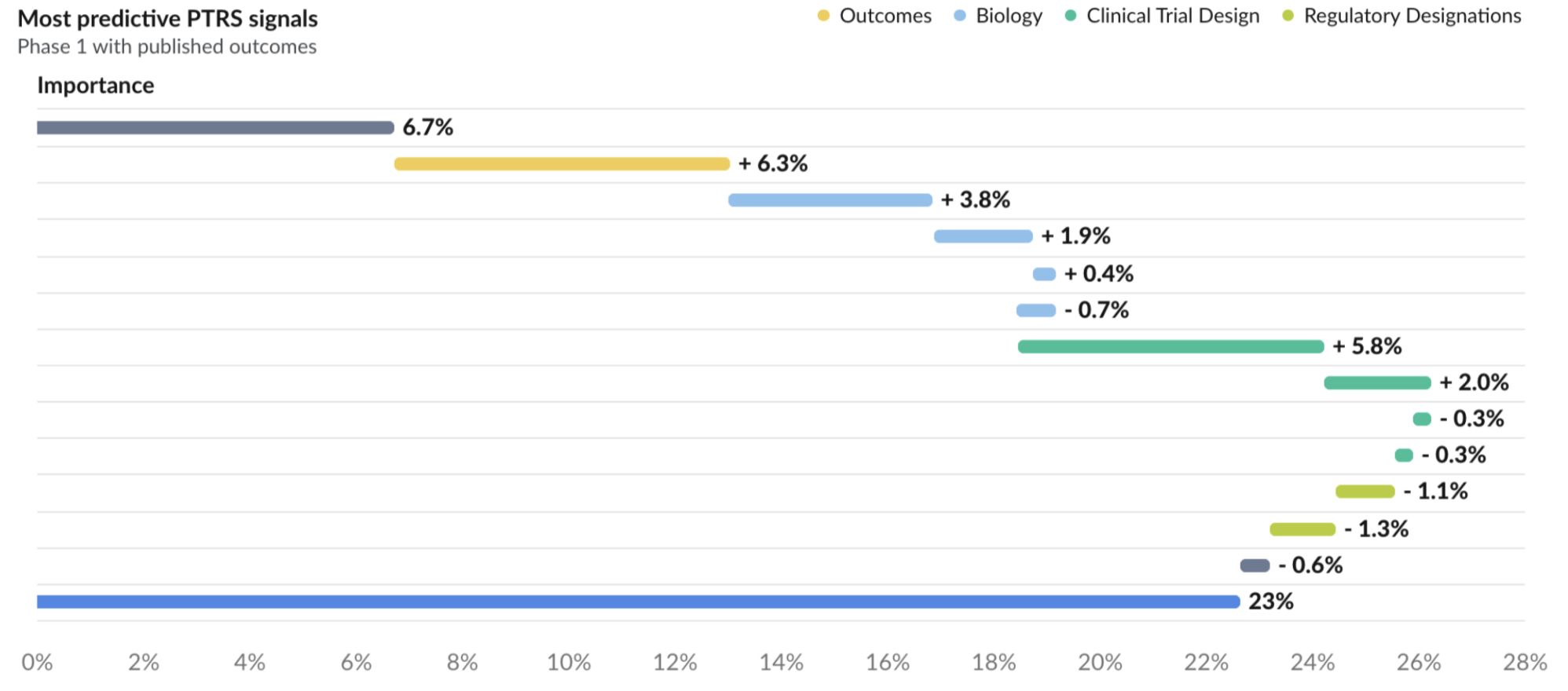
For this publication, driver names and values are not disclosed; they remain available within the Intelligencia AI platform. The visual above highlights the program-level explainability that brings full transparency to the AI-driven PTRS assessment. This visualization in Portfolio Optimizer is customized for each program to inform users on the drivers that lead to a program’s PTRS.
“We’ve made tremendous progress removing that AI black box, as the explainability that is offered in Portfolio Optimizer really does help. It especially shines when potential skeptics try to grasp what they can’t see going on behind the scenes with AI algorithms,” noted Wang.
Portfolio Optimizer’s clean labeling, consistent tagging, and direct access to trial identifiers reduced manual curation and quality-control tasks. Timely clinical data updates, coupled with an expert-in-the-loop approach led by in-house domain experts in biology, ensure a rigorous standard for data curation.
This accelerated workflows and made it easier to isolate emerging targets and modalities within each tumor, enabling robust landscape characterizations to inform evolutions and opportunity areas.
Median Phase 3 Predictive PTRS by Tumor and Priority Segment (Ongoing Programs)
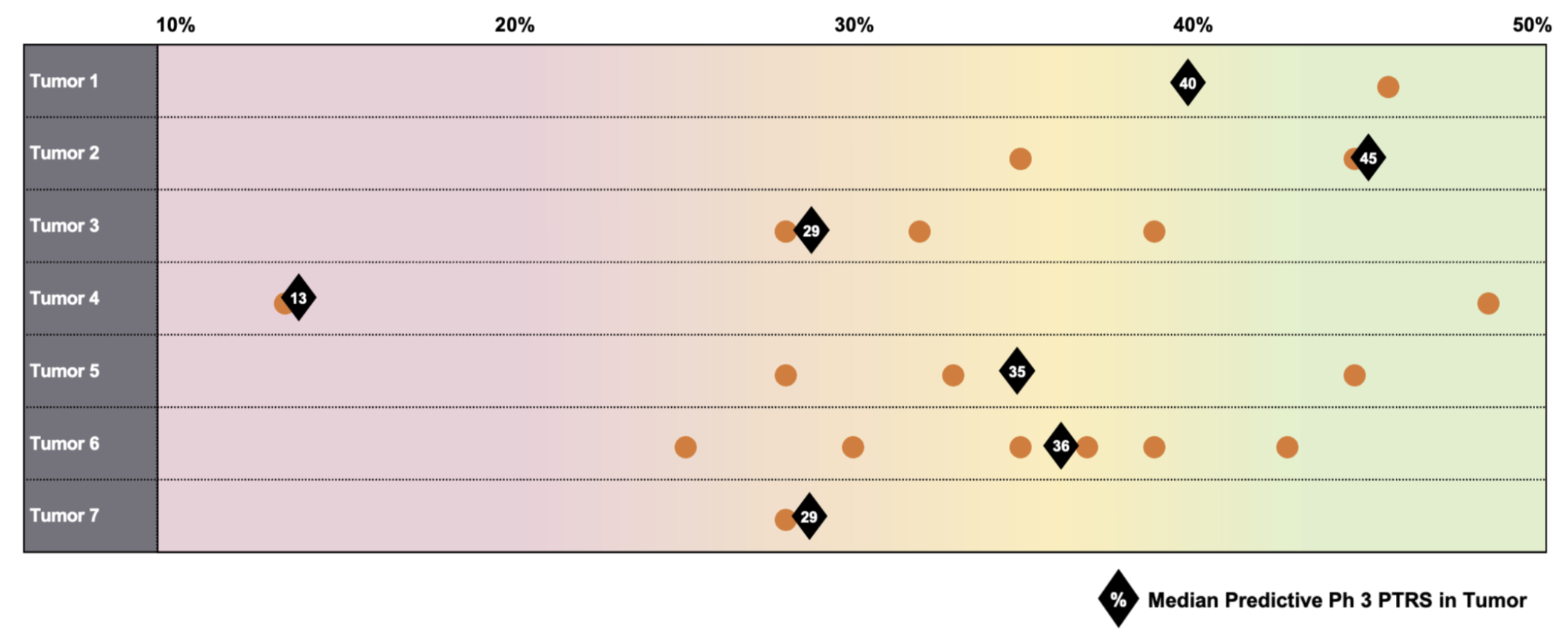
The visualization built with Intelligencia AI data helped inform the final patient segments to target, considering the development risk of these segments compared to the median Phase 3 PTRS within the given tumor.
“What stood out was the ease of using Portfolio Optimizer and the clarity of its data tagging. The AI-driven PTRS component instills strong confidence in the resulting scores,” shared Nate Mayo, business advisory consultant at ZS.
Although the overall project timeline was tight, the platform’s data and friendly UX enabled significantly greater depth of analysis. It went at least twice as deep as would have been feasible with alternative tools or manual approaches. Because of this, ZS could pursue additional analyses and alternative views without compromising the timeline and deliverables.
The Impact: A Transparent, Data Driven Path to Sound Business Decisions
ZS delivered a clear recommendation on which solid tumors the global pharma organization should prioritize over the next decade and which patient segments within those tumors to target. These recommendations were based on analyses conducted using Intelligencia AI data and AI-driven probabilities.
“Intelligencia AI provides a database that collates the data in a straightforward way providing cleaner data and better tagging than other solutions I have worked with. Anytime you can accelerate or eliminate manual effort, I think it’s always valuable,” shared Mayo.
The approach brought a rigorous, data-driven perspective that helped paint the competitive landscape, accelerate decision
cycles, and counter organizational bias by grounding choices in transparent evidence.
Feedback from the global pharma organization has been very positive. The engagement has even sparked broader internal interest—including from Medical and R&D divisions — particularly when it comes to the PTRS methodology and how it could inform future projects.
Mayo reinforced, “The PTRS component is a core differentiated capability that we can bring to our engagements by leveraging Intelligencia AI, which tends to be the aspect that we get the most interest and positive feedback on.”
While multiple sources can describe pipelines, stakeholders viewed PTRS as a distinct differentiator that added tangible decision value when combined with the platform’s clean, harmonized, AI-ready data and ease of use.
For more tailored, data-rich insights, let’s talk.