Embarking on a long and expensive endeavor, such as developing a drug, requires meticulous planning. Charting out one’s steps is critical, and so is understanding what is happening around you. You need confident answers to questions such as:
- What is the competition doing?
- How is the landscape in which my drug competes shifting?
- How can I make the best data-driven decisions within the broader context of a complex and ever-changing environment?
TL;DR
Pharma leaders can’t afford to fly blind when it comes to competition. Competitive landscapes that provide comprehensive, data-driven views of pipelines, mechanisms, and market dynamics are crucial for informed decisions across R&D, BD&L, and commercial functions. Yet most teams still rely on manual, outdated methods that fragment insight and slow action. Intelligencia AI’s Competitive Landscapes offering unifies expertly curated, real-time data into one intuitive platform, empowering teams to assess opportunities, benchmark competitors, and make faster, more confident strategic decisions.
What is Competitive Landscaping in Pharma?
Competitive landscaping—the systematic process of identifying, analyzing and visualizing current and emerging competitors, products, and market dynamics—is crucial for answering these questions and informing strategic decisions throughout the entire organization.
In this blog, we examine the crucial role that detailed competitive landscapes play for pharmaceutical companies, how they are currently created, and discuss the importance of comprehensive and expertly curated data in providing an accurate picture.
Why Competitive Landscapes Matter Across Pharma Companies
It would be hard to overstate the broad relevance of competitive landscapes in the pharmaceutical industry. Insights gained from these analyses inform decisions in every department.
Here is an overview of decisions informed by competitive landscaping among the functions and departments with which we work most closely.
- Executive Leadership & Portfolio Strategy
- Portfolio prioritization – deciding which therapeutic areas, modalities or indications to focus resources on.
- M&A and partnerships – identifying acquisition or licensing targets, potential co-development partners or threats from competitors’ alliances.
- Strategic positioning – informing long-term differentiation strategies (first-in-class vs best-in-class, geographic expansion, etc.).
- Risk mitigation – anticipating competitive threats that could erode market share or impact product lifecycles.
- Business Development & Licensing/Search & Evaluation
- Opportunity scanning – identifying in-licensing or co-development candidates.
- Valuation support – using competitor benchmarks to price deal structures.
- Negotiation leverage – understanding alternative options and competitive interest in the same assets.
Competitive landscape analysis permeates a wide range of functions throughout the entire drug lifecycle, and each department relies on competitive intelligence to reduce risk, allocate resources wisely, and position products for long-term success.
The Outdated, Manual Challenge: How Competitive Landscapes Are Typically Built Today
Numerous sources are utilized in conducting competitive landscape analyses to obtain the most accurate picture possible. Public databases and regulatory filings lay the foundation because they are authoritative and reliable sources of trial and approval information, provided in standardized formats.
However, these documents often lag behind real-world events, lack granularity and require time-consuming manual work to extract, normalize, and compare data. Current commercial databases reduce the effort involved with data curation, but are only as good as the provider’s curation process.
Scientific literature and conference abstracts offer early visibility into new mechanisms, while translational research and peer-reviewed publications provide credibility and methodological detail. The challenges with these sources are that the information is difficult to track across thousands of abstracts and papers. Another challenge is bias, as positive results are more likely to be reported than negative ones.
While financial information sheds light on competitors’ deal-making strategies and valuations, it is often sparse, failing to paint a complete picture. Market research and primary intelligence come with high cost, bias, and are difficult to run at scale.
Similarly, social media monitoring can provide qualitative insights and offer real-time visibility into announcements, collaborations, and trial recruitment; however, the information obtained is often noisy, unverified, speculative, and biased.
In an ideal scenario, the foundation for competitive landscapes would be a comprehensive, unified database that integrates all data streams, contains only expertly curated data, is updated in near real-time, and features an intuitive visualization tool that makes complex data more accessible.
Current Challenges With Competitive Intelligence Process in Pharma
In developing our new data-driven solution, we recognized the need to address several common limitations of traditional solutions. From our customer base, we continue to hear common limitations and challenges around the current state of running competitive intelligence exercises, such as:
- Labor-intensive and time-demanding task due to multiple datasets scanning, compiling and source cross-referencing, producing an instantly outdated snapshot
- Lack of standardization due to inconsistent definitions of competition creates internal misalignment
- Siloed information, dependent on work and time availability, that precludes stakeholders from comprehending the wider context
- Low update frequency of such highly demanding CI reports is limited to specific internal needs, preventing access to real-time information
- Limited dissemination can lead to operational bottlenecks that can cause internal misalignment
Competitive Landscapes Done Right
At Intelligencia AI, we have developed the leading data platform that drugmakers of all sizes can use to de-risk decisions and assess critical metrics, such as the probability of technical and regulatory success (PTRS).
Our newest addition to our suite of solutions, Competitive Landscapes, leverages this comprehensive and expertly curated clinical database to deliver real-time, curated insights into the current and future drug development landscapes. It allows companies to track competitor pipelines, identify market gaps, and make faster, more confident strategic decisions without manual curation or outdated reports.
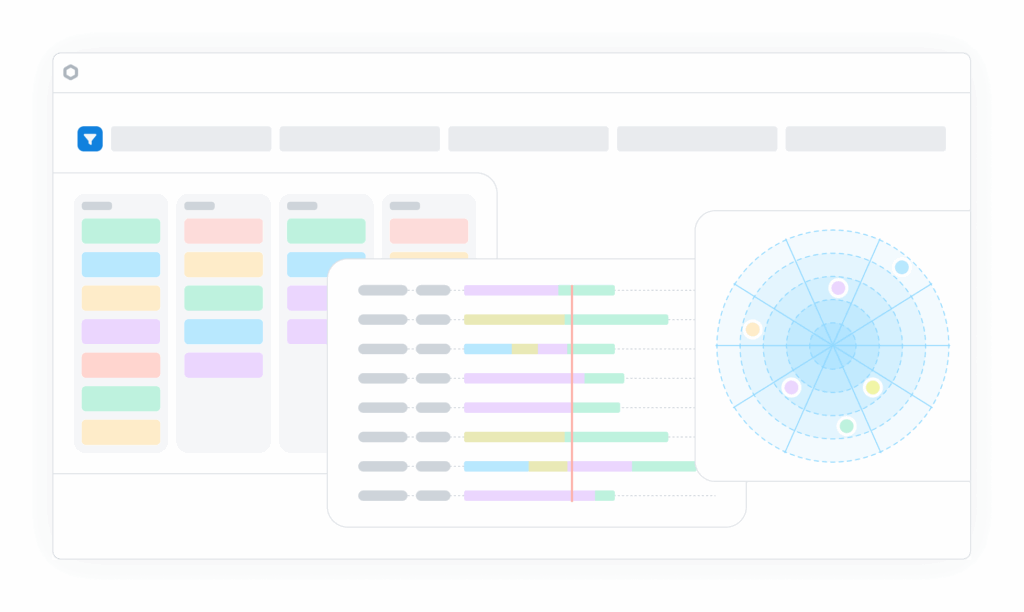
Competitive Landscapes enables users to perform detailed, fast, current, and comprehensive competitive landscaping analyses.
- Zero in on the data that’s most relevant, and create landscapes at an indication, technology or population level.
- Aligns teams across departments and offers a single source of truth.
- Eliminates time-consuming manual report building with curated, current data, reducing the risk of outdated or incomplete insights.
- Delivers intuitive visualizations and dashboards to quickly inform decisions at all levels of the organization.
- Integrates with the Intelligencia Portfolio Optimizer™ (AI-driven PTRS) and Dynamic Benchmarks (historical clinical data), providing insights not only into current and past landscapes but also allowing a look into the future.
Our Competitive Landscapes solution has undergone a stringent, independent analysis conducted by a top pharmaceutical company that compared the data to their internal automated data capture. They found an accuracy and completeness rate of over 90% in the clinical data underlying Competitive Landscapes, as well as nearly 100% coverage of major events of interest in competitive intelligence (e.g., approvals, discontinuations, readouts).
Given the crucial importance of competitive landscaping across all departments of pharmaceutical companies, a current, expert database that provides a robust foundation is essential, enabling teams to stop operating blindly and make faster, better-informed decisions with confidence.
Ready to explore Competitive Landscapes for yourself? Get in touch here.